Rental system

Korea Apartment Types Explained: Officetel, Villa, Apartment, Goshiwon

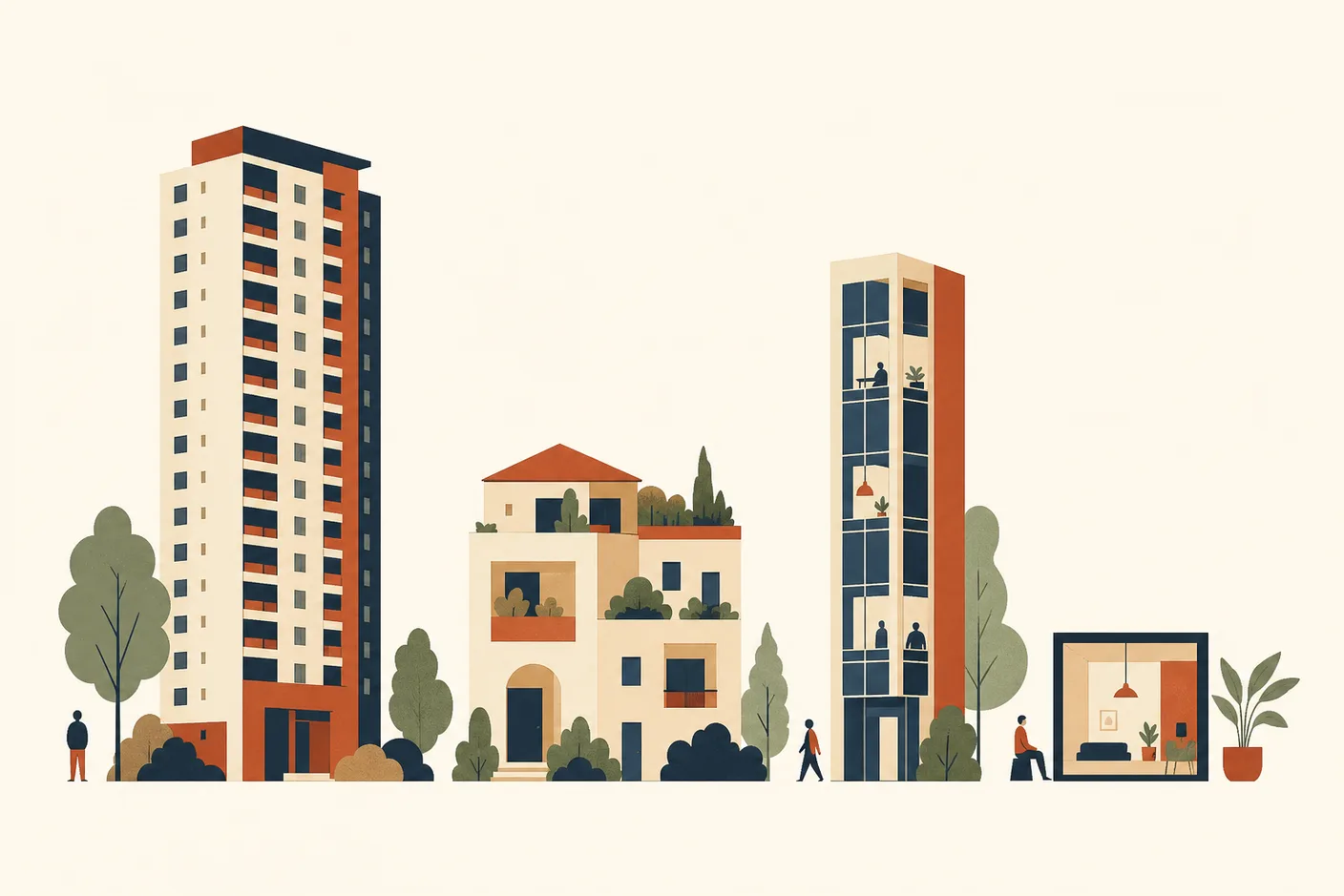
Korea has four main housing types foreigners encounter: officetels, villas, apartments, and goshiwon. Learn what each one is, who it suits, and what to watch for.

Reviewed by the Seoulstart teamLast updated · May 2026~6 min read

Verified against 11 primary sources.Fact-checked May 2026. Every figure linked to its source.

Key facts

  • Officetels (오피스텔) are the most common housing type for foreign singles and young professionals in Seoul
  • Villas (빌라) are low-rise residential buildings that offer more space at lower cost than officetels
  • Apartments (아파트) are large managed complexes, more transparent contracts but harder for foreigners to access
  • Goshiwon (고시원) are micro-rooms with shared facilities, starting from around ₩300,000/month
ShareWhatsAppLinkedInEmailSend it to someone who'd find it useful.

The four housing types foreigners encounter in Korea

Korea's housing vocabulary is different from most countries. When you search for an apartment, you're likely to encounter four distinct unit types. Understanding the differences before you start viewing saves time and prevents surprises.

Officetel (오피스텔)

What it is: A multi-use building designed for both office and residential use. In practice, the vast majority of units in areas popular with foreign residents are used as residences. The name comes from blending "office" and "hotel."

Typical layout: Studio (원룸) or 1-bedroom. Kitchen is usually a kitchenette rather than a full kitchen. Private bathroom. Most buildings have a lobby, elevator, and sometimes a gym or convenience store.

Size: Studio: 15–25 sqm. 1-bedroom: 30–45 sqm.

Cost: Generally higher per square metre than villas, but lower than apartments in the same area.

Pros:

  • Most foreigner-accessible, agents know them, listings are easy to find
  • Often furnished or semi-furnished
  • Central locations in Itaewon, Hongdae, Hannam, Gangnam
  • Building management handles maintenance
  • Security (key fob entry, CCTV)

Cons:

  • Small relative to price
  • Management fee (관리비) adds ₩80,000–₩200,000/month on top of rent
  • Kitchenettes are small, limited if you cook seriously
  • Some buildings have thin walls

Best for: Single foreign residents, young professionals, anyone arriving for a 1 to 2 year contract who wants convenience over space.


Villa (빌라)

What it is: A low-rise residential building, typically 4–5 floors, with individual units. The word "villa" in Korean has no luxury connotation. It simply means a multi-family walk-up building that isn't a large apartment complex.

Typical layout: 1–3 bedrooms. More living space than an officetel for the same price. Full kitchen, separate rooms.

Size: 1-bedroom: 33–50 sqm. 2-bedroom: 50–80 sqm.

Cost: Usually 10–30% cheaper than a comparable officetel in the same neighbourhood.

Pros:

  • More space for the money
  • Full kitchen, better for families or people who cook
  • Quieter buildings, more residential neighbourhoods
  • Good for longer stays (2+ years)

Cons:

  • Building quality varies widely, older villas can have insulation problems, mould risk
  • No professional management, deal directly with the landlord
  • Fewer central listings; harder to find as a foreign resident
  • Some buildings have no elevator (inconvenient on upper floors)

Best for: Families, couples, longer-term renters who want more space and are comfortable doing more legwork to find the right unit.

Checking villa building age: Ask for the building register (건축물대장) to confirm the construction date. Buildings built before 2000 may have older electrical systems, inadequate insulation, or moisture issues. This matters more in villas than in managed apartment complexes.


Apartment (아파트)

What it is: Large standardised residential complexes managed by a professional property management company. Tall towers, uniform layouts, gated entrance, gym, parking.

Typical layout: 2–4 bedrooms. Designed for families. Significantly larger than officetels.

Size: 2-bedroom: 60–85 sqm. 3-bedroom: 85–120 sqm.

Cost: Premium pricing, particularly in Gangnam, Mapo, and Seongdong. Deposits for jeonse (전세) on a 2-bedroom can reach ₩600,000,000–₩1,000,000,000 in premium areas.

Pros:

  • Standardised, well-regulated contracts
  • Professional management, clear processes for maintenance, checkout
  • Strong resale / re-rental market (easier to exit)
  • Better amenities: gym, underground parking, children's playground
  • Generally safer for deposit protection due to stricter management

Cons:

  • Hard for foreign residents to access, many complexes require a Korean guarantor
  • Higher minimum deposits
  • Larger units than most single foreign residents need
  • Less central, most complexes are in residential areas, not areas popular with foreign residents

Best for: Families, long-term residents with Korean contacts who can work through the process, people who want the most transparent contract possible.


Goshiwon (고시원)

What it is: Micro-room accommodation with shared kitchen and bathroom facilities. Originally built for students studying for government exams (고시). Now used by students, recent graduates, and anyone needing the cheapest possible option.

Typical layout: Single room of around 7 sqm (the legal minimum for new builds since 2015 MOLIT standards and the 2021 Seoul ordinance; older units can be as small as 4 sqm). A bed, a desk, sometimes a small wardrobe. Shared kitchen and bathroom on each floor.

Cost: ₩300,000–₩600,000/month including utilities. No deposit.

Pros:

  • Cheapest housing available
  • No deposit required, pay monthly
  • Utilities included
  • Available immediately, flexible lease terms

Cons:

  • Very small, around 7 sqm for new builds (older units can be 4–5 sqm), not comfortable for long-term living
  • Shared facilities
  • No privacy
  • Not suitable for anyone with more than a suitcase of belongings
  • Quality varies enormously

Best for: Arriving in Seoul with no housing arranged, needing somewhere for 2 to 6 weeks while you search. Not suitable as a long-term residence.


Comparison table

Across Korea's four main residential types, the trade-off is consistent: officetels (오피스텔) offer easiest foreigner access at mid-range cost, villas (빌라) give 10 to 30 percent more space for the money but vary in quality, apartments (아파트) are most standardised but hardest to access without a Korean guarantor, and goshiwon (고시원) are the cheapest stopgap at around 7 sqm with no deposit.

TypeTypical sizeCost vs officetelBest forForeigner access
Officetel15–45 sqmBaselineSingles, young professionalsEasiest
Villa33–80 sqm10–30% cheaperFamilies, long-termModerate
Apartment60–120 sqm20–50% moreFamilies, long staysHardest
Goshiwon7 sqm new builds / 4-5 sqm older stock50–70% cheaperTransitional / very short staysEasy

Foreigners buying property in Korea: 2025 permit requirement

If you are considering purchasing (not renting) a Korean apartment or any real estate, be aware of a significant regulatory change introduced in August 2025.

Foreign residents are now required to get a Foreign Land Transaction Permit (외국인 토지거래허가) before purchasing residential property in designated permit-required zones. These zones cover most of Seoul's major residential districts, including Gangnam, Seocho, Mapo, and others.

Key points:

  • The permit requirement applies to foreigners purchasing apartments in designated transaction zones (토지거래허가구역)
  • Permits are issued by the local district office (구청)
  • Applications must be submitted before the purchase contract is completed
  • Approval is not guaranteed; the stated purpose of purchase is evaluated

This is a separate and additional step on top of the existing real estate registration process. Verify the current list of designated zones and permit requirements at www.molit.go.kr before beginning any purchase process. The zone designations change periodically.

This guide covers rental types. For purchase guidance, consult a licensed Korean real estate attorney (부동산 전문 변호사).


A note on furnished vs unfurnished

Most officetels and goshiwon come furnished. Most villas and apartments do not. Furnished means a bed, wardrobe, desk, air-con unit, washing machine, and sometimes a small appliance set. "Semi-furnished" usually means appliances are installed (fridge, washing machine, air-con) but no furniture.

Always confirm what's included in writing before signing.

Sources

What's changed

  • 2026-05-28: /en voice retune (Lonely Planet voice model, stripped AI-corporate + bureaucratic phrasing, problem-first opener).
  • 2026-04-21: Retrofitted for AI-search citability, added direct-answer passages at the top of each section.
ShareWhatsAppLinkedInEmailSend it to someone who'd find it useful.

Related guides

Frequently asked questions

What is the best housing type for foreigners in Korea?

For most foreign residents, especially singles and young professionals, an officetel (오피스텔) is the most practical choice. They're widely available, commonly listed on foreigner-friendly platforms, often furnished, and located in central areas. Villas offer more space for the price if you're comfortable navigating a less standardised process.

What is the difference between a Korean villa and an apartment?

In Korea, 'villa' (빌라) means a low-rise multi-family building, not a luxury property. Apartments (아파트) are large standardised complexes with professional management. Apartments are more transparent and regulated but harder for foreigners to rent. Villas are more varied in quality, some are excellent, some are poorly maintained.

How big is a typical Korean studio (원룸)?

A typical Korean studio (원룸) is 15–25 sqm, roughly 160–270 square feet. This is small by Western standards but standard in Seoul. Larger one-bedroom officetels run 30–45 sqm. Two-bedroom units (투룸) are typically 45–65 sqm.

Show all 5 questions

What is a goshiwon and should I stay in one?

A goshiwon (고시원) is a micro-room with shared kitchen and bathroom, typically around 7 sqm (the legal minimum for new builds since 2015 MOLIT standards and the 2021 Seoul ordinance; older units can be as small as 4 sqm). They start from around ₩300K/month and include utilities. They're a legitimate short-term option if you're arriving with no housing arranged and need somewhere for a few weeks while you search. Not suitable for long-term living.

Do Korean apartments require a Korean guarantor?

Some apartment complexes require a Korean guarantor (보증인) for foreign tenants, especially for jeonse contracts. Many foreigner-friendly officetels and villas do not. A good foreigner-friendly agent can identify properties that don't require a guarantor and negotiate terms on your behalf.

ShareWhatsAppLinkedInEmailSend it to someone who'd find it useful.

Verified Sources

This guide is grounded in primary sources

Every fact in this guide is linked to a primary source. Cross-check anything.

  1. 01

    Korea Ministry of Land, Infrastructure and Transport (MOLIT) homepage

    molit.go.krAccessed April 2026
  2. 02

    Seoul Housing Portal

    housing.seoul.go.krAccessed April 2026
  3. 03

    National Law Information Center, Building Act Enforcement Decree (건축법 시행령) Schedule 1: use classifications for 아파트, 연립주택, 다세대주택, 다가구주택, 오피스텔, 다중생활시설

    law.go.krAccessed May 2026
  4. 04

    National Law Information Center, Housing Act (주택법), 공동주택 categories, current version Law No. 20048

    law.go.krAccessed May 2026
  5. 05

    MOLIT, Officetel Building Standards (오피스텔 건축기준), Notice No. 2024-1066 effective December 30 2024

    law.go.krAccessed May 2026
Show all 11 sources
  1. 06

    MOLIT, Multi-occupant Facility Building Standards (다중생활시설 건축기준), Notice No. 2015-897: goshiwon room size, shared facilities, fire safety

    law.go.krAccessed May 2026
  2. 07

    National Law Information Center, Apartment Complex Management Act (공동주택관리법)

    law.go.krAccessed May 2026
  3. 08

    National Law Information Center, Real Estate Transaction Reporting Act (부동산 거래신고 등에 관한 법률): governs foreign land transaction permit

    law.go.krAccessed May 2026
  4. 09

    Korea Policy Briefing, Foreign Land Transaction Permit zone designation August 2025 (Seoul, Incheon, Gyeonggi; 4-month move-in / 2-year stay residency requirement)

    korea.krAccessed May 2026
  5. 10

    Statistics Korea, 2023 Population and Housing Census: apartments account for 53.1% of all Korean households; total housing stock 19.55M units

    kostat.go.krAccessed May 2026
  6. 11

    Korea Real Estate Board (REB), Officetel Price Trend Survey: monthly index, 2,000 sample units across 9 regions, by size band

    reb.or.krAccessed May 2026

Cite this guide

Seoulstart Editorial Team. (2026). Korea Apartment Types Explained: Officetel, Villa, Apartment, Goshiwon. Seoulstart. Retrieved from https://seoulstart.com/guides/korea-apartment-types
More formats (Chicago, BibTeX) ▾

Chicago

Seoulstart Editorial Team. 2026."Korea Apartment Types Explained: Officetel, Villa, Apartment, Goshiwon."Seoulstart. Last modified May 28, 2026. https://seoulstart.com/guides/korea-apartment-types.

BibTeX

@misc{seoulstart-korea-apartment-types,
  author = {{Seoulstart Editorial Team}},
  title = {{Korea Apartment Types Explained: Officetel, Villa, Apartment, Goshiwon}},
  year = {2026},
  publisher = {Seoulstart},
  url = {https://seoulstart.com/guides/korea-apartment-types},
  note = {Last updated May 28, 2026}
}

Have feedback or a topic we should cover?

Email us with corrections, questions, or topic suggestions. Or leave a public review so other foreign residents find the site.