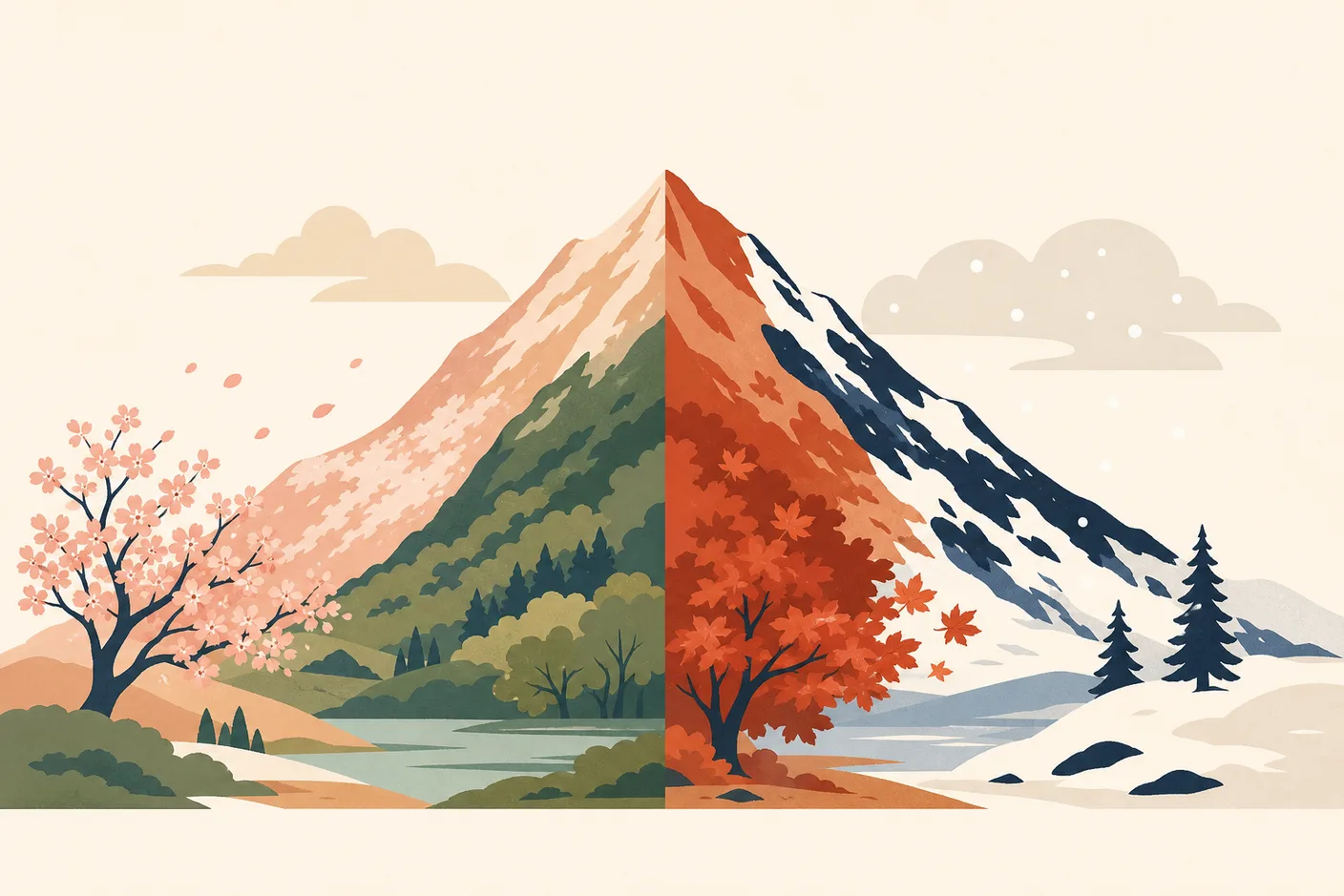
Living in Korea, you have access to one of the most varied seasonal landscapes in East Asia. The practical question is not which season is best in the abstract. It is which month works for where you want to go, and whether you have booked far enough ahead to actually get there.
This guide breaks each season into what you get, when to go, and what to watch out for. The resident's calendar at the end maps specific destinations to months and tells you the booking lead time for each.
Spring (March to May): Blossoms, Dust, and the Best Month of the Year
What spring looks like
Spring arrives fast. Temperatures rise from roughly 5–10°C in early March to 18–23°C in May. The gap between a late-March cold snap and a warm May afternoon can feel like two different countries.
The signature draw is cherry blossom (벚꽃) season. Blooms move from south to north: Jeju Island and Busan see the first flowers in roughly late March, Seoul follows in roughly early April, and Gangwon Province comes a few days after Seoul. Peak color lasts about one week after first bloom. After peak, petals fall quickly, so the window is short.
Exact dates shift year to year. In 2025, blooms arrived three to eight days earlier than historical averages. Warming temperatures are pushing the season earlier overall. Check the annual VisitKorea blossom forecast, published each February or March, before booking travel around the blossoms.
The Jinhae caveat
Jinhae Gunhangje (진해 군항제) in Changwon is Korea's largest cherry blossom festival, held in roughly late March to early April each year. The dates are set annually to match the forecast, so check the official festival site before planning. Day-trip trains from Busan to Jinhae sell out months ahead. If you want Jinhae without the worst of the crowds, visit on a weekday in the second half of the festival run rather than opening weekend.
The dust problem
Yellow dust (황사) and fine dust (미세먼지) peak in March and April. Episodes typically last two to five days. During a bad episode, outdoor time is worth limiting. Check AirKorea (airkorea.or.kr) before any spring outdoor trip.
May is the solution to both problems. The dust quiets down, temperatures are mild and stable, crowds are lower than April, and there is no monsoon risk. For most residents, May is the most reliable spring travel month.
Summer (June to August): Monsoon, Heat, and the August Price Spike
The monsoon window
Korea's monsoon (장마) typically starts in late June. The historical start sequence runs: Jeju around June 19, the southern coast around June 23, and central Korea including Seoul around June 25. Average duration is 31 to 32 days, but this average misleads. The 2020 monsoon ran about 49 to 54 days depending on region, the longest on record at the time (the Korea Meteorological Administration recorded 49 days for central Korea). In 2025, an unusually strong North Pacific high pushed the monsoon front north, so Jeju saw only about two weeks of jangma (its second-shortest on record) and the southern mainland about 12 days, while central Korea ran longer. Duration varies sharply by year and region. The Korea Meteorological Administration (KMA) publishes a seasonal forecast in May or June each year. Check it before planning a June or July trip.
August: the price spike and how to time around it
August is Korea's peak domestic vacation month (여름휴가), with the busiest travel window usually clustered from late July into early August. East-coast and Busan lodging prices rise sharply during this window. Book four to eight weeks ahead if you plan to travel during late July or August.
The post-monsoon window in late July, before the August price peak arrives, is worth targeting. The rain has cleared, temperatures are hot but clear, and accommodation is not yet at peak rates. This timing requires flexibility, because the monsoon end date is unpredictable.
Typhoons
Typhoon season peaks in August and September. Most Korea-landfall typhoons since 2000 have struck between late August and mid-September. The east coast is more exposed than the west coast or Seoul. If you are planning an east-coast trip in August or September, check typhoon advisories and build flexibility into your booking.
Autumn (September to November): The Strongest Season
Autumn is Korea's consensus best travel season, and the foliage (단풍) is the reason. Temperatures drop from summer heat to a comfortable 15–20°C in October and 5–15°C in November. Skies are clear. Typhoon risk falls after mid-September.
Foliage: how it moves and why the dates keep shifting
Foliage starts at high-elevation northern peaks in late September and moves south and downhill through November. "First color" is defined as 20 percent of leaves changed; "peak" is 80 percent. The 2025 VisitKorea forecast put peak dates at: Seoraksan (설악산) October 23, Jirisan (지리산) October 23, Hallasan (한라산) October 30, Bukhansan (북한산) November 4, and Naejangsan (내장산) November 11.
Warming temperatures are pushing peak dates later each year. Do not rely on the 2025 dates for future planning. Check the KMA annual foliage forecast, published around late September each year, for the current season's projections.
Where to go
Seoraksan, accessible via Sokcho on the northeast coast, is the earliest major peak and the most photographed. The cable car and main trails fill early on peak weekends. Arriving before 8 a.m. on a foliage peak weekend is a reasonable target to avoid the worst of the crowds, though exact conditions vary.
Naejangsan in Jeolla Province is known for its dense maple groves and peaks later than Seoraksan, typically in early to mid-November. The later timing means you can plan an autumn trip well into November.
The Chuseok variable
Chuseok (추석) falls on the 15th day of the eighth lunar month, which places it in September or October depending on the year. It is Korea's largest travel surge. If Chuseok lands during peak foliage, train tickets and accommodation in foliage destinations sell out far in advance. Check when Chuseok falls for the year you are planning and either book very early or adjust your destination to one that peaks before or after the holiday.
Winter (December to February): Skiing, Ice, and Clear Cold
Ski season
Gangwon Province ski resorts typically open between mid and late November, depending on snowfall and snowmaking conditions. In the 2025-26 season, Yongpyong and Phoenix opened November 21, Alpensia and Welli Hilli opened November 22, High1 opened November 28, and Vivaldi Park opened December 4. Most resorts close in late February or early March. For current-season opening and closing dates, check resort websites in October or November.
The resorts are two to three hours from Seoul by bus or train. Weekend traffic on the Yeongdong Expressway can add significant time. Book weekend accommodation at the resort town rather than commuting from Seoul if you plan to ski more than one day.
The ice festival
The Hwacheon Sancheoneo Ice Festival (화천 산천어 축제) runs from mid-January to early February on a frozen river in Hwacheon, Gangwon Province. The 2025 festival ran from January 11 to February 2. The central activity is ice fishing for mountain trout (산천어) through holes cut in the ice. Hwacheon is about 45 minutes from Chuncheon, which is reachable by subway from Seoul. The festival draws large crowds on winter weekends; go on a weekday if you want more space on the ice.
Seoul in winter
December and January are Seoul's driest months. Cold and clear is a fair description: average January temperatures in Seoul run roughly -8°C to 4°C (verify current figures at weather.go.kr for the year you are traveling). The east coast sits warmer than Seoul because the Taebaek mountain range blocks cold northwest winds.
Seollal warning
Seollal (설날) falls in late January or early February each year and triggers the second-largest travel surge of the year. KTX and intercity buses sell out one to two months ahead. Many regional shops and restaurants close for three to five days around the holiday. Plan travel to arrive at your destination before Seollal begins or depart after the main holiday migration ends.
Resident's Calendar: Month by Month
| Month | Top destinations | Crowd and price signal | Booking lead time |
|---|---|---|---|
| March | Jeju, Busan (early blossoms) | Moderate; dust episodes possible | 3–4 weeks; earlier for Jinhae trains |
| April | Jinhae, Seoul parks, Gyeongju | High on blossom peak weekends | 4–8 weeks for Jinhae |
| May | Anywhere; low crowds, mild temps | Low to moderate | 1–2 weeks |
| June | Mountains before monsoon, Jeju | Low until late June | 1–2 weeks |
| July | East coast beaches (pre-August peak) | Rising fast after monsoon clears | 4–6 weeks for late July |
| August | Beaches, east coast, national parks | Highest of year; prices spike | 4–8 weeks |
| September | Seoraksan (early foliage), east coast | Moderate; higher if Chuseok falls here | 3–4 weeks; earlier around Chuseok |
| October | Seoraksan, Jirisan, Bukhansan | High at foliage peak | 3–4 weeks |
| November | Naejangsan, Bukhansan (late peak) | Moderate in early Nov | 2–3 weeks |
| December | Seoul, ski resorts (opening weeks) | Low except ski resort areas | 2–3 weeks |
| January | Hwacheon ice festival, ski resorts | Moderate; Seollal window is high | 2–4 weeks; 6–8 weeks around Seollal |
| February | Ski resorts, Jeju (warming early) | Moderate; Seollal risk in late Jan | 2–3 weeks |
FAQ
What is the best time to visit Korea for the first time?
May or October. May has mild temperatures, low crowds compared to spring blossom season, and no monsoon risk. October gives peak foliage color at the major mountain parks. Both months avoid the main holiday travel surges.
When is cherry blossom season in Korea?
Cherry blossoms (벚꽃) bloom from south to north: Jeju and Busan in roughly late March, Seoul in roughly early April, and Gangwon Province a few days after Seoul. Peak color lasts about one week after first bloom. Exact dates shift each year by a week or more. Check the annual VisitKorea blossom forecast before booking.
How bad is the monsoon season, and should I avoid it?
Korea's monsoon (장마) typically starts in late June and lasts 31 to 32 days on average, but that average hides real variance: the 2020 monsoon ran about 49 to 54 days depending on region (the longest on record at the time, with the Korea Meteorological Administration recording 49 days for central Korea). In 2025, an unusually strong North Pacific high pushed the monsoon front north, so Jeju saw only about two weeks of jangma and the southern mainland about 12 days, while central Korea ran longer. After the monsoon clears in late July, there is a short window of hot, clear weather before the August peak-vacation crush. If you travel in summer, late July before the peak week (roughly July 28 to August 5) is a reasonable target.
When should I book trains for Chuseok or Seollal travel?
Book as soon as ticketing opens, which is typically 30 to 60 days before the holiday. KTX trains and intercity buses sell out within hours of release for the days immediately before and after Chuseok (추석) and Seollal (설날). If you miss the ticket window, travel two or three days before the main holiday flow starts, or one or two days after it ends. Many regional restaurants and small businesses close for three to five days around both holidays.
When do ski resorts in Korea open?
Major Gangwon resorts typically open between mid and late November, depending on snowfall and snowmaking. In the 2025-26 season, Yongpyong and Phoenix opened November 21, Alpensia and Welli Hilli opened November 22, High1 opened November 28, and Vivaldi Park opened December 4. Most resorts close in late February or early March. Check resort websites in October or November for current-season dates.
Is autumn foliage in Korea getting later each year?
Yes. Warming temperatures have pushed peak foliage dates progressively later over recent decades. The 2025 VisitKorea forecast put Seoraksan peak at October 23 and Naejangsan peak at November 11. Check the Korea Meteorological Administration annual forecast, released around late September, for each season's specific dates rather than using historical averages.