When history walks into the room
Your Korean colleague goes quiet when the news comes on. An older coworker mentions something about "the IMF times" with a look you can't read. Someone at a dinner table calls a politician "basically a 친일파" and the conversation sharpens.
Modern Korea is young. The country was a Japanese colony 80 years ago, was at war 75 years ago, lived under military rule until 1987, and impeached its president in 2025. All of this comes up in conversation, in TV dramas, in political speeches, and in workplaces. None of it is past tense.
This guide covers the eras Koreans reference most often, what the Korean terms mean, and where you will encounter them in daily life. That is enough to follow the conversation and to understand why some topics land the way they do.
Era 1: Japanese colonial rule, 1910-1945 (일제강점기)
Japan formally annexed Korea in August 1910, ending 500 years of Joseon dynasty rule. The occupation lasted 35 years.
Colonial authorities suppressed the Korean language in schools, required Koreans to adopt Japanese names (창씨개명), and conscripted hundreds of thousands for wartime labor. The comfort women (위안부) system forced or deceived Korean women into sexual slavery for the Japanese military from 1932 to 1945. In 1993, the Japanese government formally acknowledged the system existed. The adequacy of reparations has remained contested between the two governments ever since.
친일파 (chinilpa), Koreans who collaborated with Japanese authorities, is not a historical term. It is a live political accusation used in current political fights. A special law in the mid-2000s enabled the Korean state to reclaim property held by documented collaborators' descendants.
March First Movement (삼일운동), 1919
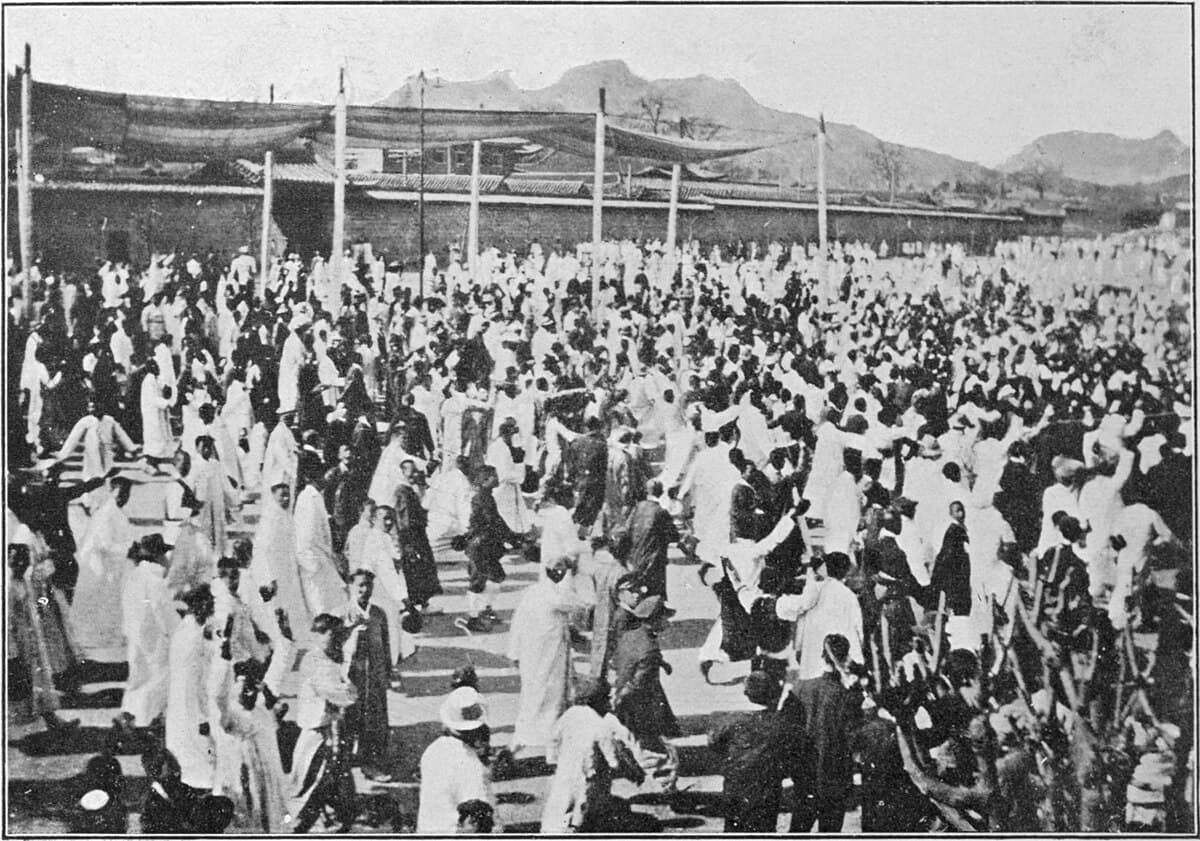
On March 1, 1919, an estimated 2 million Koreans participated in independence demonstrations across the country (more than 1,500 documented gatherings of 50 or more people in the first three months alone). The protests were suppressed, but they led directly to the founding of Korea's Provisional Government (임시정부) in Shanghai.
South Korea's constitutional preamble traces the republic's legitimacy to this movement. When Korean politicians invoke the spirit of the republic, this is the origin they mean.
When this era comes up
August 15 is 광복절 (Liberation Day). Every year the president gives a televised speech. The tone toward Japan in that speech is analyzed within hours as a political signal.
March 1 (삼일절) is a national holiday with public ceremonies. In 2019, Japan restricted semiconductor material exports to Korea. Korean consumers organized boycotts of Japanese goods almost overnight. They called it "No Japan" (노재팬). The speed of that response makes more sense with the colonial history as context.
The 2018 TV drama "Mr. Sunshine" (미스터 션샤인) dramatized the late colonial period and renewed public debate about independence fighters and collaborators. The Dokdo/Takeshima island dispute is another Japan-Korea flashpoint that appears regularly in political news.
Sensitivity note: The "colonial modernization" argument, which credits Japan's colonial administration with contributing to Korea's development, is rejected by the overwhelming consensus of Korean historians and is considered deeply offensive by most Koreans.
Era 2: Korean War, 1950-1953 (한국전쟁 / 육이오)
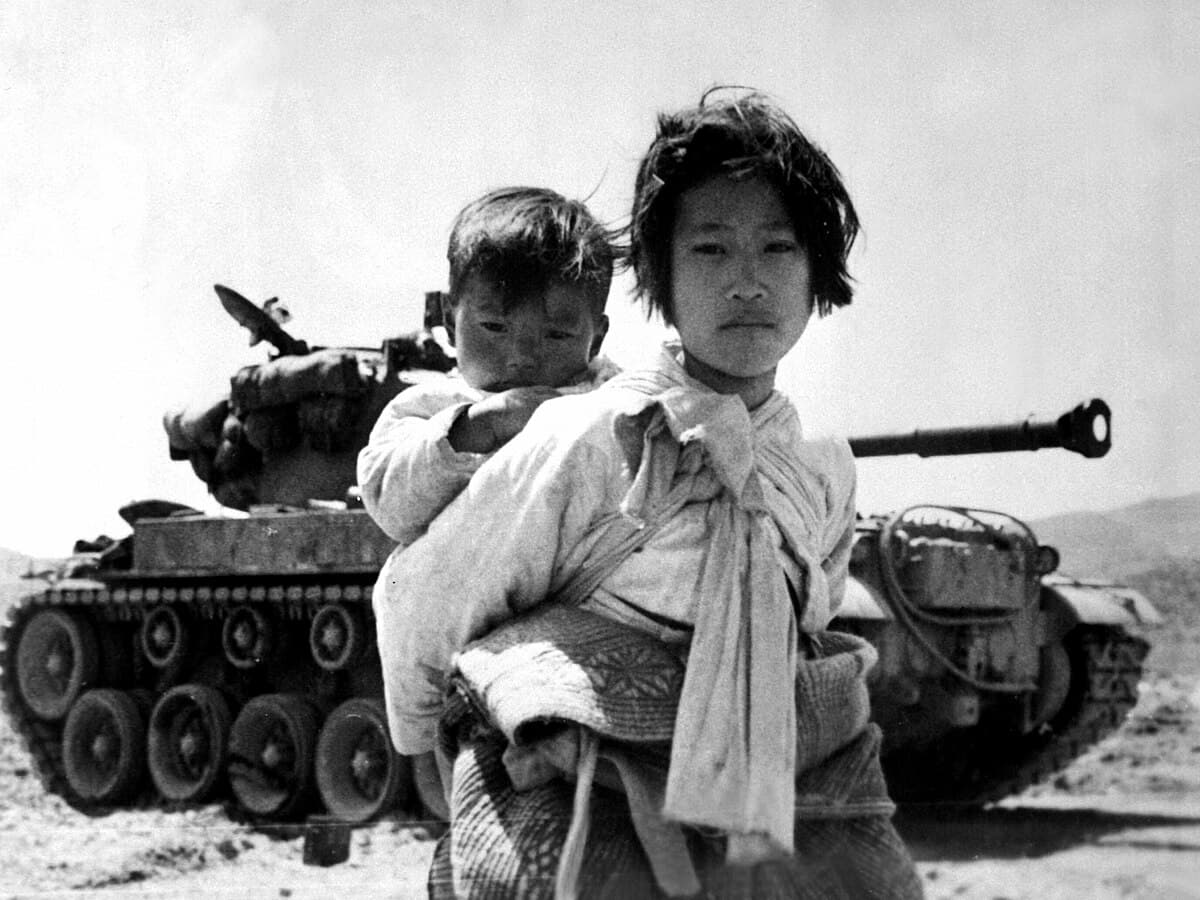
On June 25, 1950, North Korean forces crossed the 38th parallel. In Korean the war is called 육이오 (6.25) after that date. An armistice was signed on July 27, 1953. No peace treaty was ever signed. The Korean War is legally unresolved.
The division separated an estimated 10 million families. As of January 2026, more than 75 percent of South Koreans who registered for government-sponsored inter-Korean family reunion lotteries since 1988 had already died before getting a turn (up from 68 percent in 2021). Only a few thousand families took part in in-person reunions across the entire 2000 to 2018 reunion program.
Korean War civilian casualty estimates range from 1.5 to 3 million depending on methodology. Precise figures are contested by source.
When this era comes up
June 6 is 현충일 (Hyeonchungil, Memorial Day), honoring those who died in the Korean War and other conflicts. June 25 is the war's anniversary and is observed solemnly. Older Koreans may be visibly more affected than younger ones.
When a colleague mentions having relatives in North Korea, the word 이산가족 (isangajok, divided families) is the direct human legacy of the war. North Korea missile tests and diplomatic incidents prompt commentary that traces back to the unresolved armistice.
The generational divide on unification
In the government-funded Korea Institute for National Unification's 2025 survey, the share of South Koreans who consider unification necessary fell to 49 percent, a record low and down from 52.8 percent a year earlier, while a record 63.2 percent agreed that unification is unnecessary as long as the two Koreas can coexist peacefully. Support fell across every generation, and younger Koreans in particular tend to frame unification as an unaffordable cost, while older Koreans are more likely to frame North Korea as family. Both views exist simultaneously in Korean society.
Era 3: Military dictatorship, 1961-1987 (독재 시대)
Park Chung-hee (박정희), 1961-1979
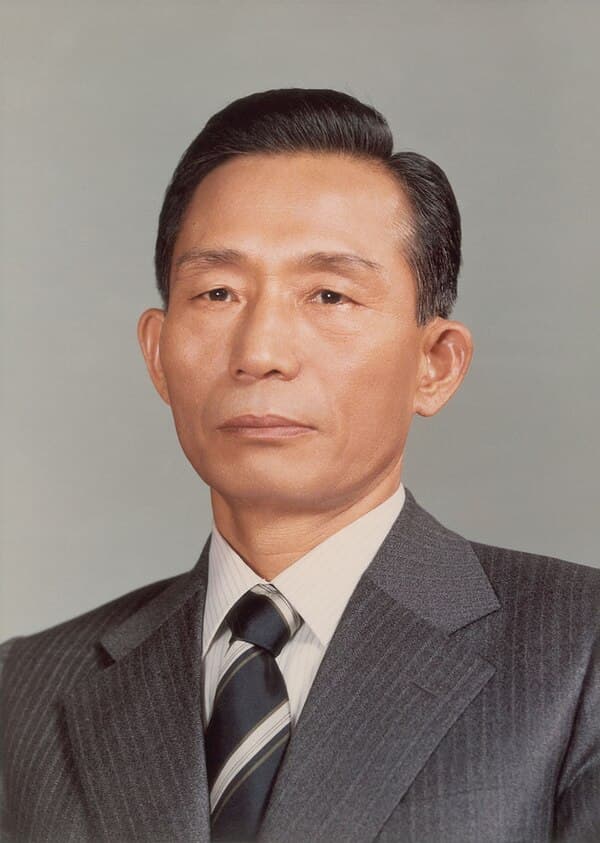
Park Chung-hee seized power in a military coup on May 16, 1961. His government produced what is called Korea's "economic miracle." GDP growth averaged roughly 10 percent per year through the 1960s and 1970s. The chaebol (재벌) system, large family-owned conglomerates including Samsung, Hyundai, LG, and SK, was built during this era with direct government support and preferential credit. A deeper guide on chaebol families and their current power is coming.
In 1972, Park suspended the constitution and dissolved the National Assembly through the 유신 (Yushin) revision, making himself effectively president for life. He was assassinated on October 26, 1979, by his own intelligence chief.
Polling has long shown this split: in one Gallup Korea survey, most South Koreans said Park "did many good things," with economic development cited most often, while a majority named the Yushin dictatorship as his worst act. These two views coexist among Koreans, often within the same person.
Chun Doo-hwan (전두환), 1980-1988
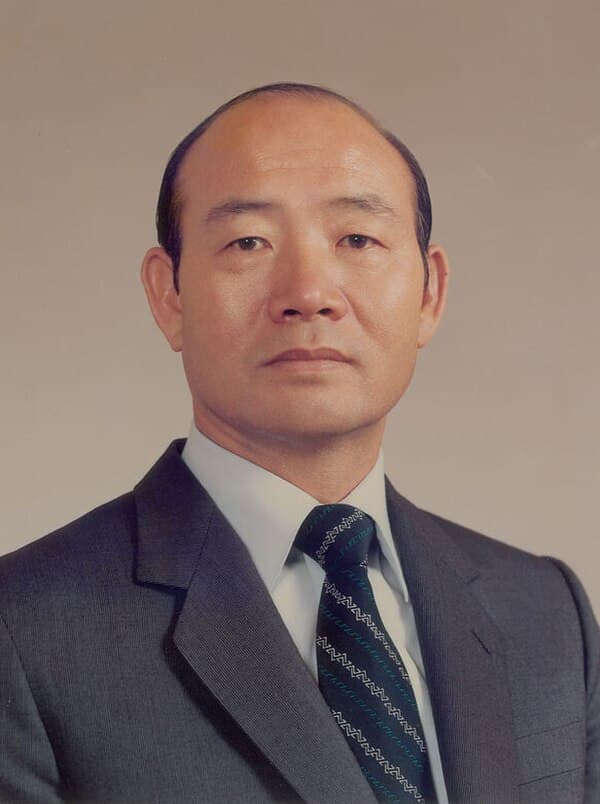
After Park's assassination, Chun Doo-hwan led a military mutiny on December 12, 1979 (known as 12.12), seizing control of the army by arresting the Army Chief of Staff without presidential authorization. On May 17, 1980, he extended martial law nationwide, taking effective control of the state. This directly triggered the Gwangju Uprising (see next section).
Chun was tried and convicted in 1996 for his coup and his actions in Gwangju, sentenced to death, then had his sentence commuted to life imprisonment, and was pardoned in 1997. He died in November 2021 having never fully acknowledged responsibility for Gwangju.
When this era comes up
When Korean colleagues debate whether strong leadership produces better economic outcomes than democracy, they are often implicitly debating Park Chung-hee's legacy. The word 유신 is invoked in political commentary any time executive overreach is discussed.
In late 2024, the dramatization of Chun's December 1979 coup, "12.12: The Day" (originally released in November 2023), surged back up Korean streaming charts in the days around Yoon's martial law declaration. The parallel was noted explicitly and immediately by Korean commentators, not as a media take but as a lived observation.
Sensitivity note: Park Chung-hee's evaluation maps almost exactly onto the Korean left-right divide. Present both views. Many Koreans who respected Park's economic record strongly condemned his daughter Park Geun-hye's administration. The two are connected but not identical.
Era 4: Gwangju Uprising, May 1980 (5.18 광주민주화운동)
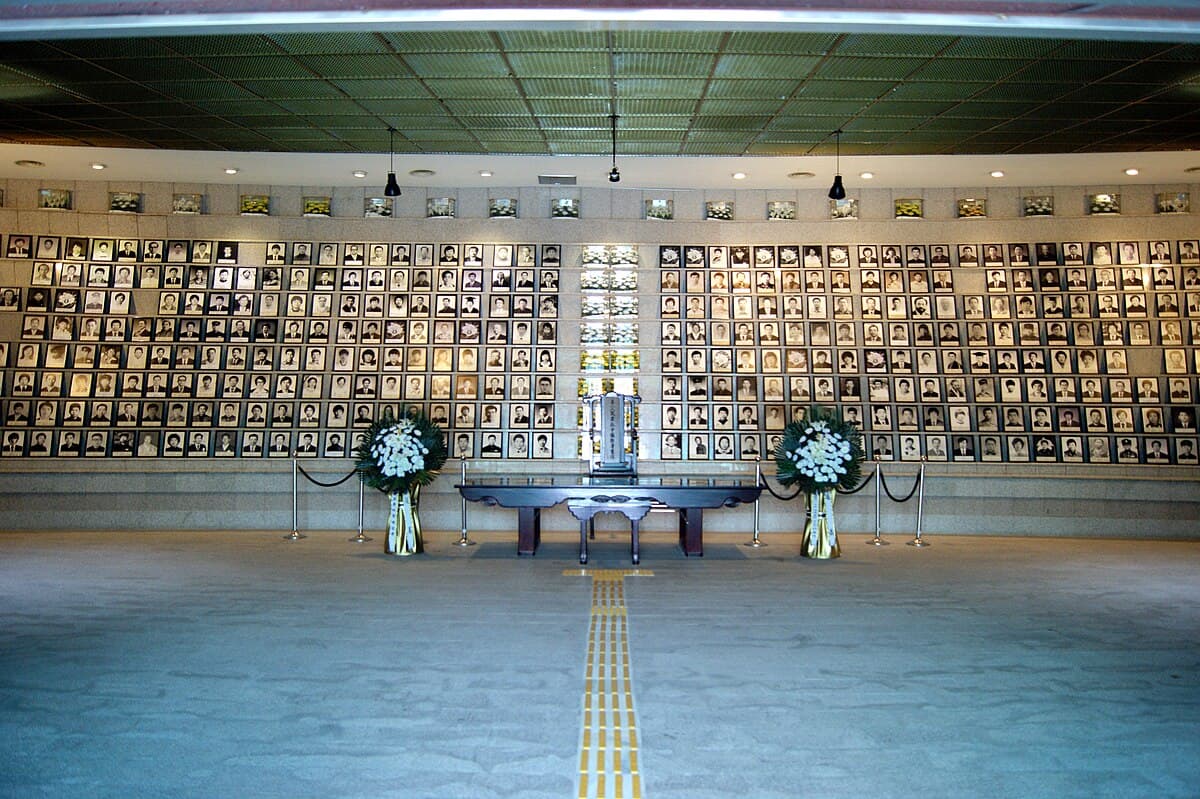
From May 18 to 27, 1980, citizens of Gwangju (광주) in South Jeolla Province rose against Chun Doo-hwan's martial law extension after paratroopers attacked student protesters. Large numbers of residents took part across ten days.
A 1995 prosecutorial investigation confirmed 193 deaths, of which 166 were civilians. Gwangju residents and survivor groups have long argued the true toll was higher, and investigations into unaccounted-for deaths and missing persons have continued. The exact figure remains contested.
May 18 was declared a national memorial day in 1997. The archive of the uprising was listed on UNESCO's Memory of the World International Register in 2011. Han Kang's novel "Human Acts" (소년이 온다, 2014) is a widely read literary account.
When this era comes up
Every May, politicians' attendance at the national memorial ceremony in Gwangju is treated as a political signal. Presidential candidates visit the May 18th National Cemetery during campaigns. In May 2025, visits to the cemetery surged, driven by the direct comparisons drawn to Yoon's 2024 martial law declaration.
The South Jeolla region (호남) votes heavily progressive. The Gwangju Uprising is part of why. In the June 2025 presidential election, Gwangju voters backed progressive candidate Lee Jae-myung by an overwhelming margin.
5.18 denial, fringe claims that the uprising was a communist conspiracy, exists and is politically toxic. The legal and historical record of the uprising is established.
Sensitivity note: The Gwangju Uprising is a national democratic touchstone, not only a regional grievance. Do not reduce it to a Honam-Yeongnam regional story.
Era 5: Democratization, June 1987 (6월 민주항쟁)
In January 1987, a university student died under police torture. Public outrage followed. By June, an estimated 4 to 5 million Koreans were in the streets of cities across the country demanding direct presidential elections and an end to military rule.
On June 29, 1987, the ruling party's chairman announced the June 29 Declaration (6.29 선언), committing to direct presidential elections and other democratic reforms.
In October 1987, the Ninth Constitutional Amendment established South Korea's current political structure, including the single five-year presidential term. December 1987 brought the first direct presidential election since 1971. This constitutional framework, known as the "87년 체제" (1987 system), remains in force today.
South Korea's democracy is 38 years old. That context matters.
When this era comes up
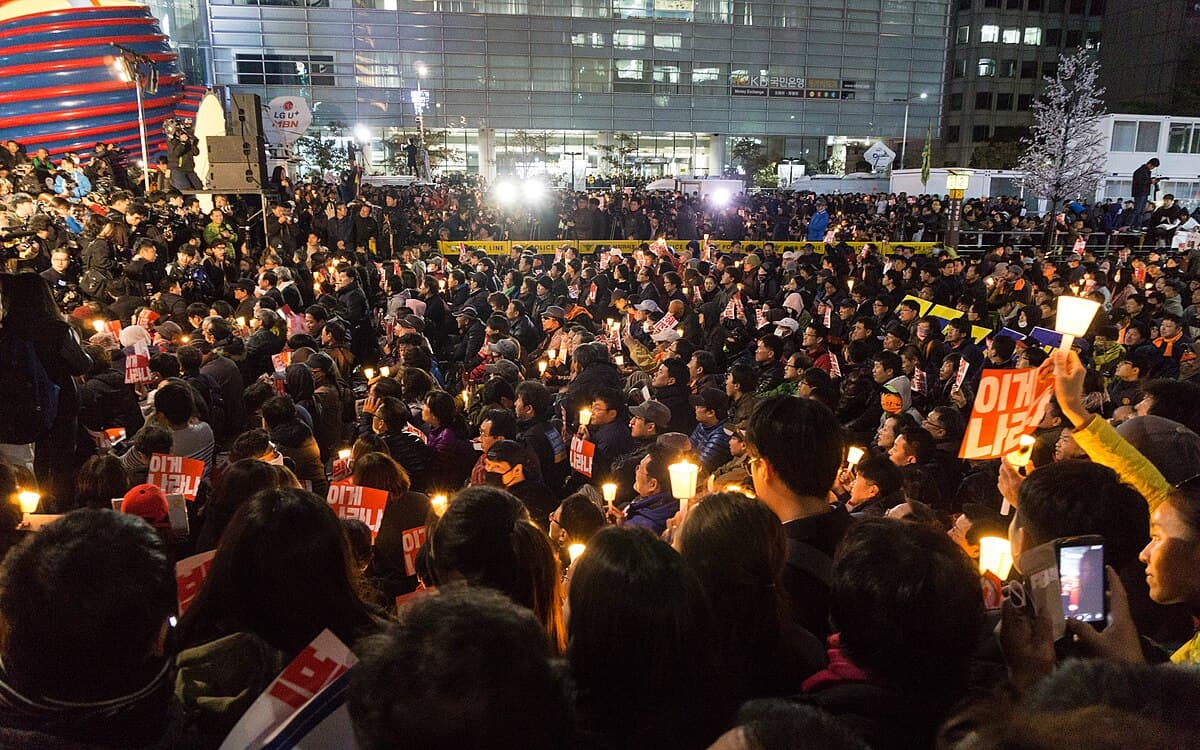
Every large-scale protest in Korea is compared to 1987. This happened during the 2016-2017 candlelight protests and during the 2024-2025 martial law crisis. The word 직선제 (direct election system) carries emotional weight. It is what the 1987 protesters won.
The 2017 film "1987: When the Day Comes" dramatizes these events and remains a cultural reference point. Debates about whether South Korea needs a new constitution often reference the limits of the 87년 체제.
Era 6: IMF crisis, 1997-1999 (IMF 외환위기)
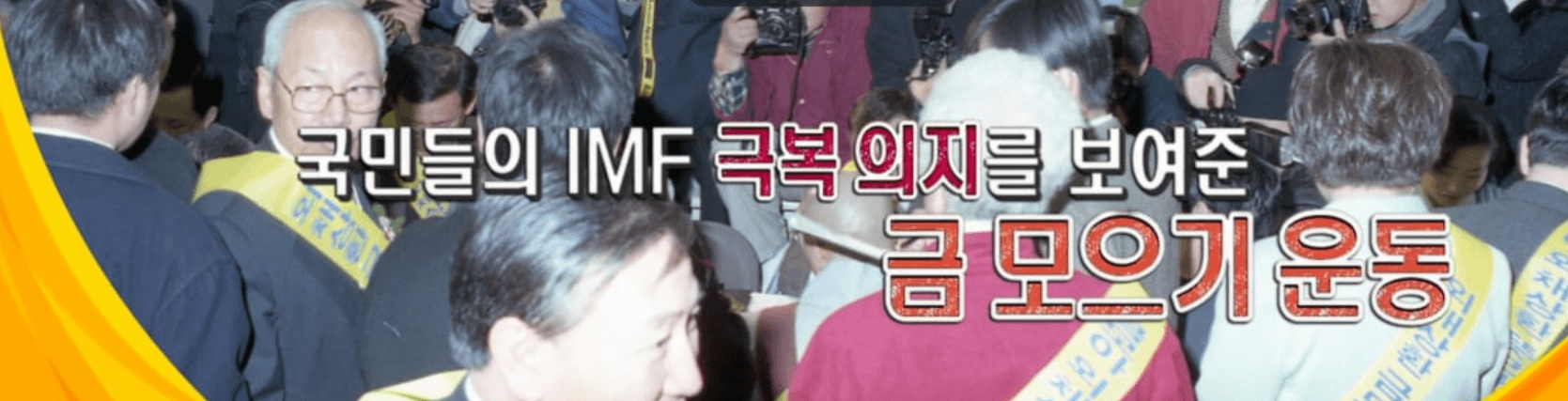
On November 21, 1997, South Korea formally requested IMF emergency assistance. It was one of the most psychologically traumatic events in modern Korean history.
Unemployment surged from 2.6 percent in October 1997 to 8.7 percent in February 1999. More than 1.7 million jobs were lost. The chaebol Daewoo collapsed entirely. Koreans donated gold jewelry en masse (금 모으기 운동) to help repay the national debt. Korea repaid the IMF loan ahead of schedule in 2001.
The crisis ended the concept of lifetime employment. Long working hours, job insecurity, and intense performance pressure in Korean workplaces all have roots in the labor market restructuring that followed. After the crisis, President Kim Dae-jung redirected investment toward IT and cultural industries. That policy pivot created the conditions for Hallyu.
The phrase "IMF 때처럼" (like during the IMF) is still used in everyday speech to describe economic hardship.
A dedicated IMF crisis guide covering the full economic and social legacy is coming. This section gives enough context to understand why the reference matters so often.
When this era comes up
Every Korean over 40 lived through this. When financial hardship is discussed at work or in families, the IMF crisis is the shared reference frame. The TV drama "Reborn Rich" (재벌집 막내아들, 2022) dramatizes this period and generated wide public discussion when it aired.
Era 7: Modern politics, 2002-present
The cultural moment: 2002 World Cup and 한류 (Hallyu)
In 2002, South Korea co-hosted the FIFA World Cup with Japan and reached the semi-finals. Millions of fans gathered in streets across the country for public viewings during the tournament. The national flag shifted from a purely sacred object to one used in popular celebration. The "Red Devils" (붉은 악마) fan movement is cited by Koreans as a formative moment in collective civic identity.
The term Hallyu (한류, Korean Wave) was coined by Chinese journalists in the late 1990s. The government's deliberate post-IMF investment in cultural industries provided the structural support. BTS, BLACKPINK, and the global K-pop industry are understood by Koreans as the output of a strategy, not an accident. A deeper guide on K-pop generations and the industry is coming.
The presidential cycle and political polarization
Korean presidents since democratization have followed a pattern of high expectations, difficult governance, and often dramatic endings.
Roh Moo-hyun (노무현, 2003-2008) was a human rights lawyer who had defended democracy activists during the dictatorship years. He died by suicide in May 2009 while under investigation for corruption. His death turned him into a progressive political symbol. His former chief of staff, Moon Jae-in, later won the presidency in 2017.
Kim Dae-jung (김대중, 1998-2003) launched the Sunshine Policy (햇볕정책), a strategy of engaging North Korea through economic cooperation. The Kaesong Industrial Complex (개성공단), a joint economic zone using North Korean labor, was a product of this era. Kim received the Nobel Peace Prize in 2000. The Sunshine Policy remains the progressive reference point on North Korea. The conservative reference point is security-first pressure.
Lee Myung-bak (이명박, 2008-2013) ended the Sunshine Policy and was later convicted of corruption.
Park Geun-hye (박근혜, 2013-2017) was the daughter of Park Chung-hee and South Korea's first female president. A scandal involving her confidante Choi Soon-sil (최순실), who influenced state policy with no official government role, triggered mass protests.
The Candlelight Revolution (촛불혁명) ran from October 2016 to March 2017. An estimated 15.87 million Koreans participated in 20 demonstrations, roughly one-third of the national population. Park was impeached by the National Assembly on December 9, 2016 (234 votes in favor) and removed from office by the Constitutional Court on March 10, 2017, in a unanimous ruling.
Yoon Suk-yeol (윤석열, 2022-2025) was a conservative former prosecutor general who defeated his opponent by 0.73 percentage points in 2022, the closest presidential election in Korean history. After the April 2024 National Assembly election gave the opposition nearly two-thirds of seats, governance became a near-total deadlock.
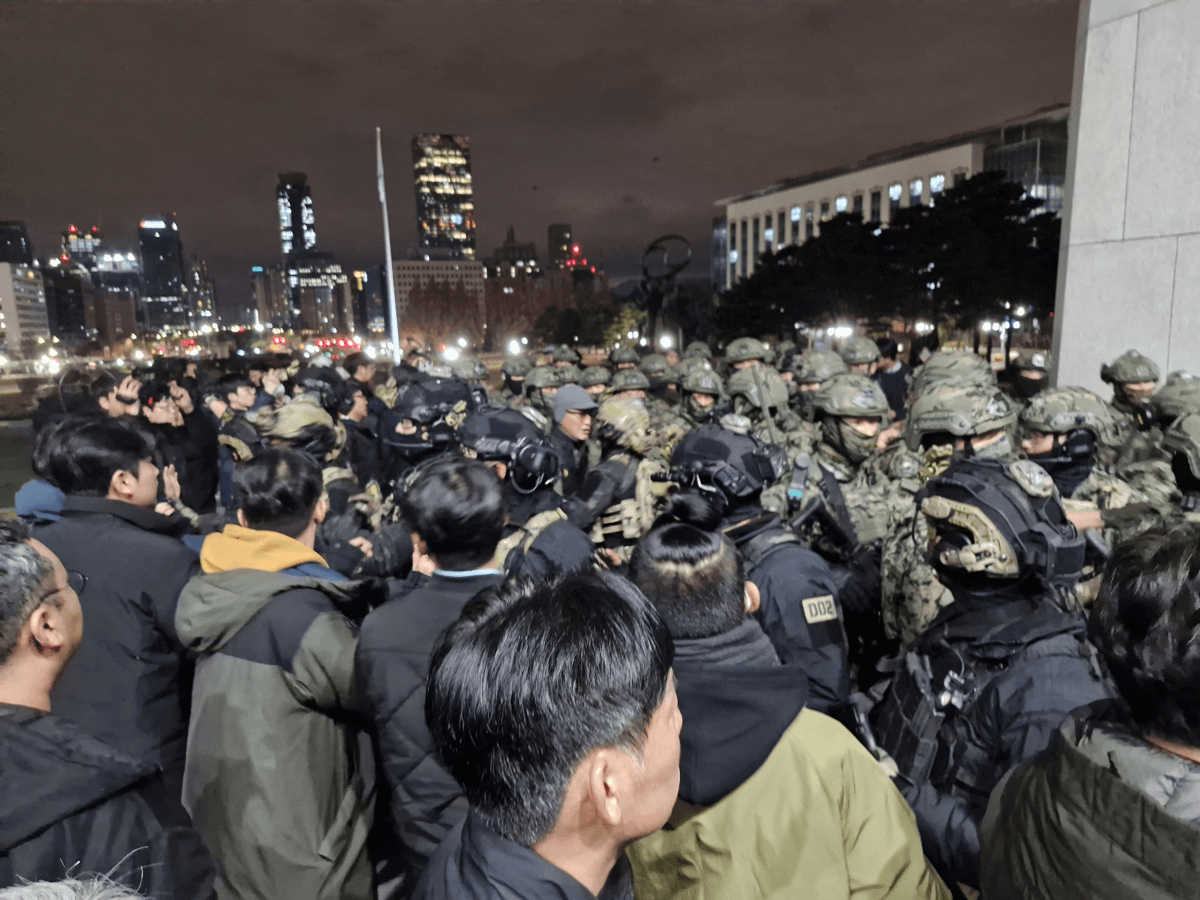
On December 3, 2024, at 10:27 PM, Yoon declared 비상계엄 (emergency martial law), citing an "anti-state" opposition. Citizens rushed to the National Assembly building to physically block military personnel from entering. At 1:02 AM on December 4, the Assembly voted unanimously to demand martial law be lifted; Yoon formally rescinded it shortly before 4:30 AM.
Yoon was impeached by the National Assembly on December 14, 2024 (204 of 300 votes). The Constitutional Court upheld the impeachment unanimously on April 4, 2025, permanently removing him from office. He was then convicted in two separate trials: 5 years in prison in January 2026 for obstruction-related charges, and life in prison in February 2026 for insurrection over the martial law declaration, the first such sentence for a Korean leader in decades. Additional trials remain pending.
Lee Jae-myung (이재명) won the snap presidential election on June 3, 2025, with 49.42 percent of the vote and a 79.4 percent turnout, the highest in 28 years. He had faced multiple criminal charges relating to his time as Seongnam mayor and Gyeonggi governor before taking office. All his trials were suspended in 2025 under Article 84 of the Korean Constitution, which bars criminal prosecution of a sitting president except for insurrection or treason. The cases could resume after his term ends.
When modern politics comes up
Two presidents impeached in less than a decade. Most Koreans understand this as evidence of both democratic resilience and deep political dysfunction. The word 촛불 (candlelight) now signals civic protest and democratic tradition in Korean public conversation. Mentions of "the political situation" (정치 상황) at work usually point to this background.
Explicit comparisons between Chun Doo-hwan's 1979-1980 actions and Yoon's 2024 declaration were made by Korean politicians, commentators, and ordinary citizens in real time. The Gwangju Uprising was invoked constantly in coverage of the December 2024 events.
Sensitivity note: The constitutional violation in Yoon's case is settled by a unanimous court ruling. Whether his underlying political grievances about opposition obstruction were legitimate is actively contested. Present the legal outcome as fact. Do not editorialize on either the conservative or progressive position.
How the eras connect
These eras are not separate chapters. They are one continuing story.
Park Chung-hee built the chaebol system to drive growth. The chaebol concentration created the vulnerability that broke in 1997. The IMF crisis destroyed lifetime employment and redirected government investment toward cultural industries. That policy created the conditions for Hallyu. Meanwhile, the democracy movement ran from Gwangju in 1980 through the June 1987 protests through the 2016 candlelight marches through the citizens who physically blocked soldiers from entering the National Assembly in December 2024. The December 2024 martial law crisis was not a random event. It was intelligible to every Korean who knew this thread.
Foreign residents in Korea who understand this thread will find that a lot of Korean public life that felt opaque suddenly makes sense.
Living in Korea with this context
Understanding this history changes practical things. If you work with Koreans, you will read workplace conversations differently. If you watch Korean news, you will understand why certain anniversaries matter. If you build friendships in Korea, you will know which topics deserve care.
Seoulstart's foreign community guide has practical guidance on building social connections in Korea as a foreign resident, including advice on navigating sensitive topics with Korean friends and colleagues.