
Monday morning, someone mentions a comeback
It is Monday morning in your Korean office. A colleague mentions something about a weekend comeback stage. Someone at the convenience store has a paper cup with an idol's face on it. The subway billboard shows a group you have never seen before in coordinated outfits, holding branded light sticks.
K-pop is not background noise in Korea. It is on the news cycle, on the subway, in the office, and in financial headlines. The agencies that manage these artists are publicly traded companies whose share prices move on group milestones. When HYBE is in the news, it is not a celebrity story. It is a corporate and policy story.
This guide does not rank songs or recommend who to listen to. It explains what Korean colleagues are referencing, who the major agencies are, how the generational framework works, and what the corporate drama in the headlines is actually about. That is the cultural literacy that makes daily life in Korea easier to follow.
Why K-pop matters beyond the music
K-pop is the result of a deliberate government strategy, not a cultural accident.
After the 1997 IMF financial crisis, President Kim Dae-jung's government formally designated cultural industries as a strategic national industry. (The full policy context is in Seoulstart's Modern Korean History 101 guide.) Investment followed in music production infrastructure, export promotion, and artist training systems. The Korean Wave (한류, Hallyu) that emerged was understood by Koreans as the output of that industrial policy.
Korean Wave content now contributes billions of dollars a year to the Korean economy. K-pop is one pillar of that: music sales, concert tours, merchandise, streaming royalties, and the affiliated cosmetics, fashion, and tourism spending that follows popular artists. The entertainment agencies that manage K-pop acts are listed companies. HYBE and SM Entertainment trade on the Korea Exchange. Their share prices rise and fall on tour announcements, membership changes, and legal proceedings.
When your Korean colleagues follow K-pop news, they are not only following music. They are following an industrial sector that employs a meaningful slice of the Korean creative economy.
The industry has also generated real criticism. Idol contracts were labeled "slave contracts" by labor advocates in the 2000s due to extreme duration and restrictive terms. The Korea Fair Trade Commission investigated and required contract revisions in 2009. The standard contract has been reformed since then, though critics continue to document long training hours, restrictive schedules, and limited personal freedom for trainees and active idols. The industry has faced public scrutiny over idol mental health and working conditions. These concerns are public knowledge in Korea and are part of how Koreans themselves discuss the industry.
The Big 4 agencies decoded
SM Entertainment
YG Entertainment
JYP Entertainment

HYBE
Almost every K-pop act that appears in Korean news is signed to one of four companies: SM Entertainment, YG Entertainment, JYP Entertainment, and HYBE. These are known collectively as the Big 4 (빅4).
SM Entertainment
SM was founded in 1989 by Lee Soo-man as SM Studio and reorganized into its current form in 1995. It is the agency most associated with building the idol system: structured training, coordinated choreography, visual design, and official fandom infrastructure. SM introduced the first-generation idol groups and continued that model through subsequent generations.
In early 2023, SM became the center of a major acquisition battle between HYBE and Kakao. Kakao ultimately won control with a higher per-share offer. As of May 2025, Kakao and Kakao Entertainment hold a combined stake of approximately 41.5 percent of SM. HYBE sold its remaining SM shares to Tencent Music Entertainment in May 2025 for approximately USD 177 million. Lee Soo-man departed after the 2023 acquisition and founded a new company called A2O Entertainment.
SM's current major acts include aespa, RIIZE, and NCT, along with long-running groups from earlier generations.
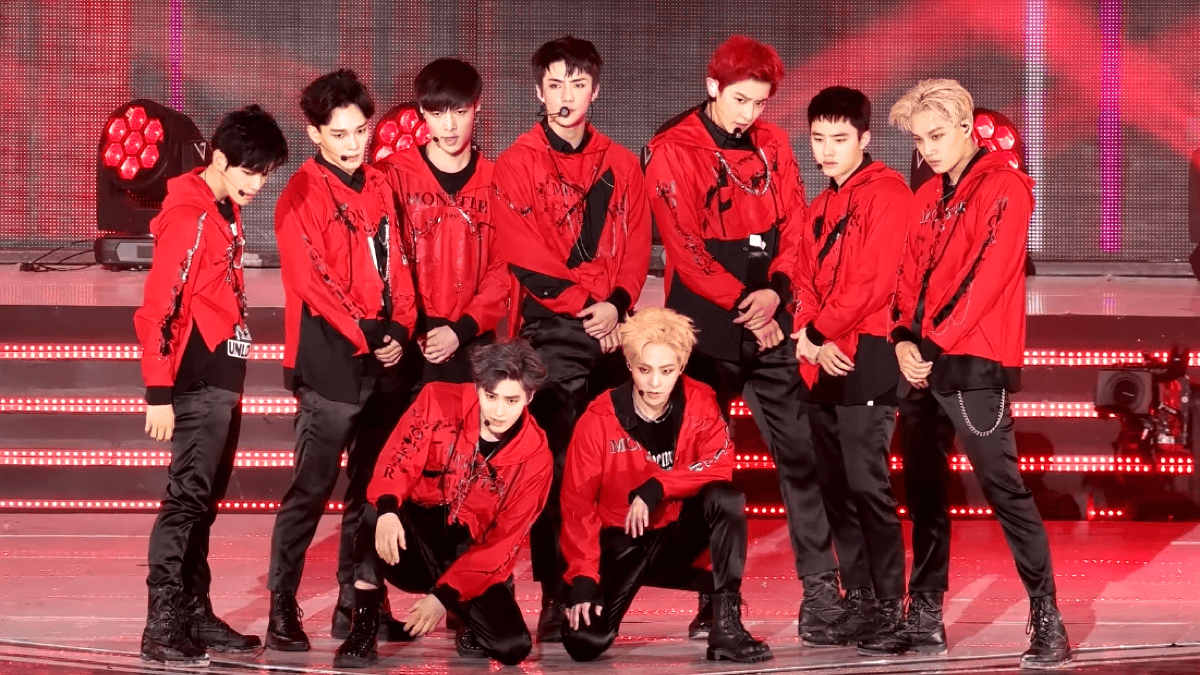
YG Entertainment
YG was founded in 1996 by Yang Hyun-suk, one of the three members of Seo Taiji and Boys. YG built its identity on a harder-edged hip-hop and R&B aesthetic compared to SM's cleaner pop sound. Yang Hyun-suk stepped down from his management role at YG in 2019 amid public controversy. He is the founder but is not in an active leadership position.
YG's best-known current act is BLACKPINK, the girl group that became the first Asian act and first girl group to headline Coachella in 2023. YG debuted BABYMONSTER in 2024.

JYP Entertainment
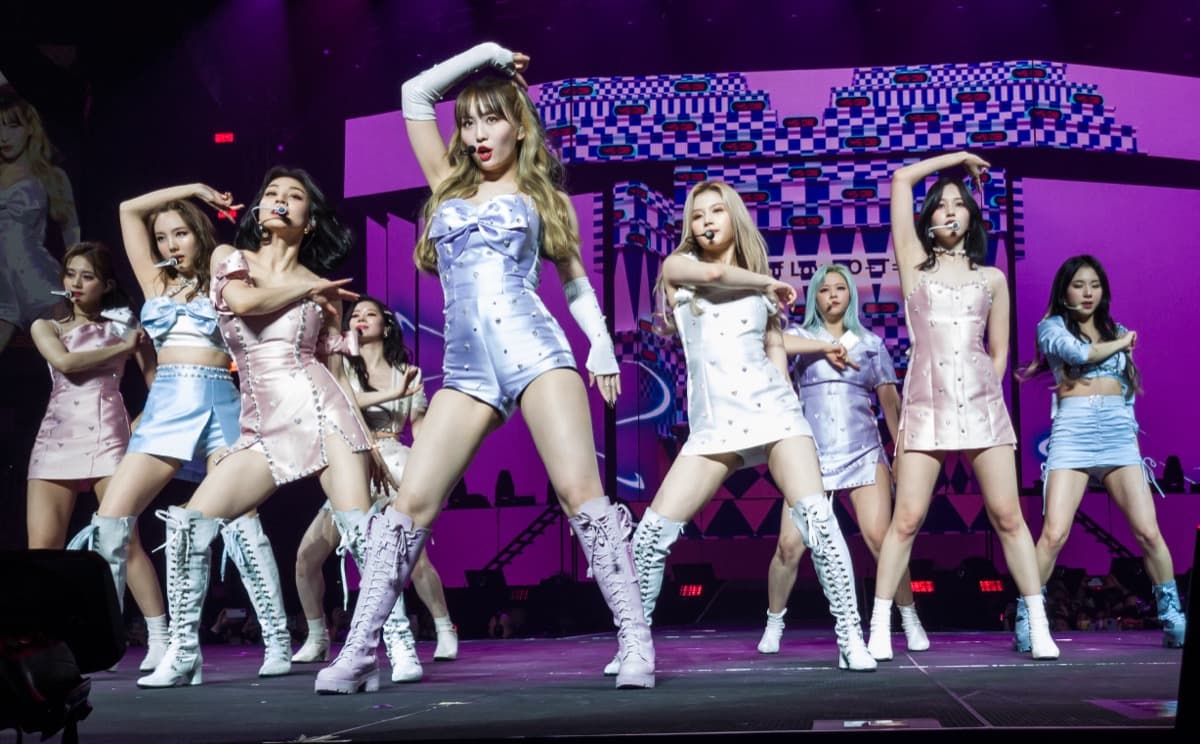
JYP was founded in 1997 by Park Jin-young, a successful solo artist who remains the public face of the company. JYP is known for strong choreography and consistent global marketing, particularly toward Japanese and Southeast Asian markets.
Current major JYP acts include TWICE, Stray Kids, ITZY, and NMIXX.
HYBE
HYBE was founded in 2005 by Bang Si-hyuk (방시혁) as Big Hit Entertainment. The company remained relatively small until BTS became a global phenomenon. In 2021, Big Hit renamed itself HYBE and became the largest entertainment company in Korea by market capitalization.
HYBE operates through subsidiary labels including Belift Lab (ENHYPEN), Source Music (LE SSERAFIM), ADOR (NewJeans, in dispute), and KOZ Entertainment. Its flagship act remains BTS.

As of April 2026, Bang Si-hyuk is under investigation by Seoul Metropolitan Police on charges of investor fraud related to the company's 2019 pre-IPO period. Police alleged approximately 200 to 260 billion won in illegal profits (estimates vary across reporting; the most recent prosecutorial-review coverage cites the higher figure). Prosecutors reviewed a police request for an arrest warrant and rejected it on April 24, 2026, citing insufficient evidence. Police re-filed the request, which prosecutors rejected a second time on May 7, 2026, on the same grounds. Bang has been banned from leaving South Korea since August 2025. The investigation is ongoing. He has not been charged, convicted, or cleared. Reports on this case should be read in that context.
The four generations of K-pop
The generational framework groups K-pop acts by the era of their debut and the conditions of the industry at that time. These are industry conventions, not formal definitions. The boundaries are debated, and reasonable observers place the same act in different generations. What the framework does well is give you a map of roughly when an act emerged and what cultural context surrounded them.
Generation 1: 1992 to the early 2000s
The starting point is Seo Taiji and Boys (서태지와 아이들), who debuted on MBC on April 11, 1992, performing "난 알아요" (Nan Arayo). The performance introduced rap and American hip-hop elements to mainstream Korean pop television. The song sold over 1.5 million copies within a month.
Yang Hyun-suk, the Seo Taiji member who later founded YG Entertainment, comes from this era. The show they debuted on used a live judge panel that voted them into last place on the episode's talent scores. The audience response was the opposite.
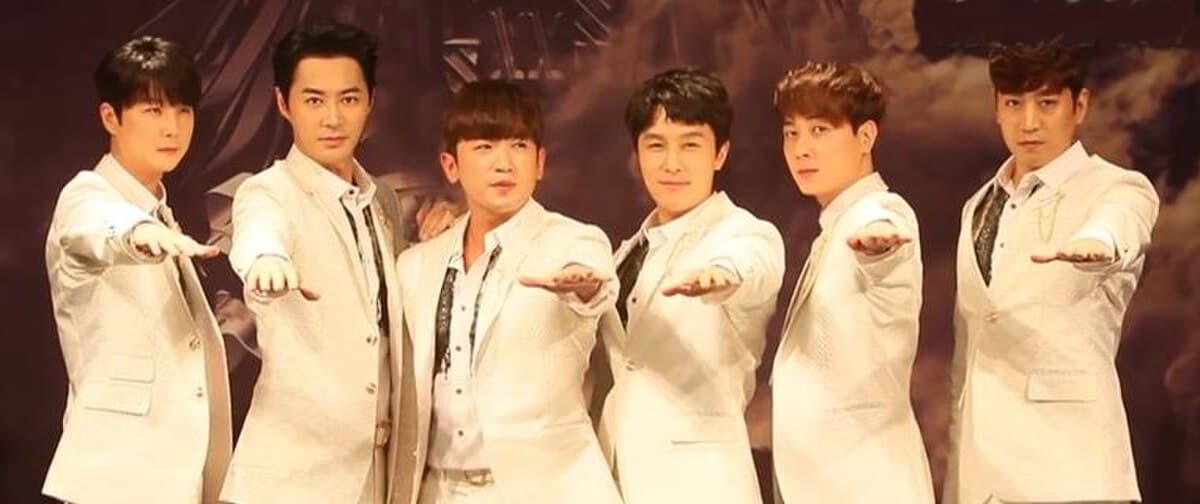
Generation 1 established the idol training model and the organized fandom structure. Key acts: H.O.T. (SM, 1996), Sechs Kies (DSP, 1997), S.E.S. (SM, 1997), Fin.K.L (DSP, 1998), Shinhwa (SM, 1998), g.o.d (1999).
Generation 2: mid-2000s to early 2010s
Generation 2 built on the idol infrastructure and expanded K-pop into export markets, particularly Japan, China, and Southeast Asia. This is when Hallyu as an internationally recognized term took hold.
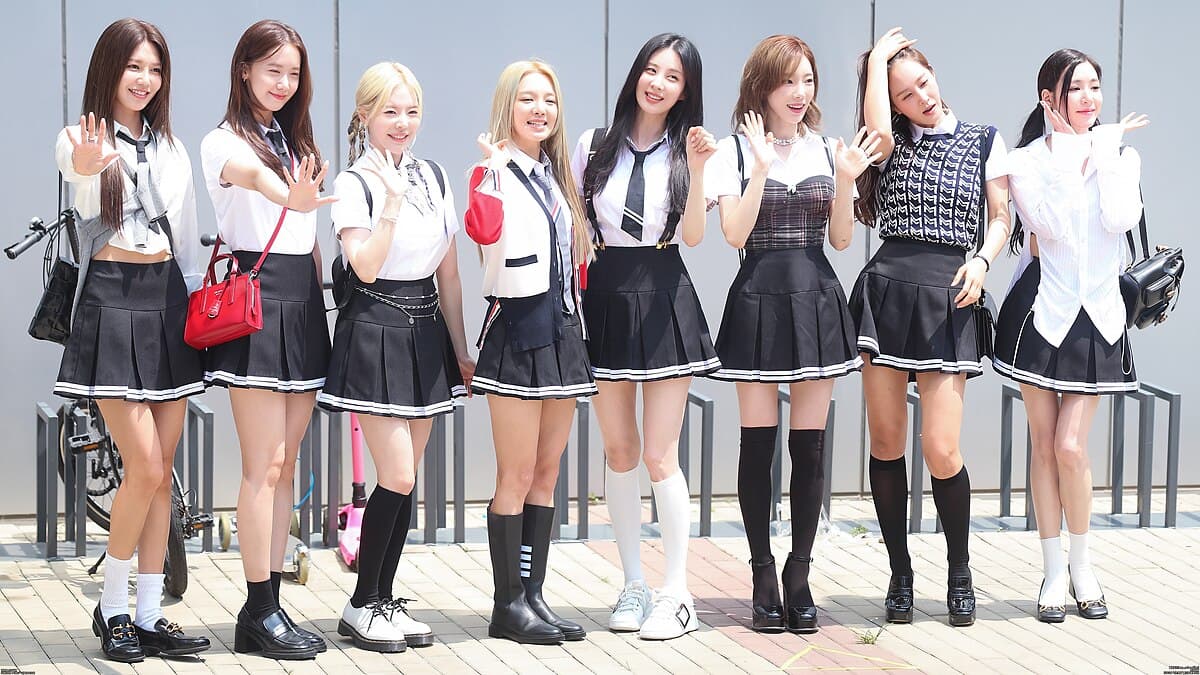
Key acts: TVXQ (SM, 2003), Super Junior (SM, 2005), Big Bang (YG, 2006), Girls' Generation or 소녀시대 (SM, 2007), Wonder Girls (JYP, 2007), KARA (DSP, 2007), SHINee (SM, 2008), 2NE1 (YG, 2009). BEAST/Highlight (2009), T-ara (2009), INFINITE (2010), and Sistar (2010) are also from this period.
Big Bang and 2NE1 in particular represented a shift toward hip-hop and streetwear aesthetics that influenced the genre's visual direction for years.
Generation 3: 2012 to 2018
Generation 3 is when K-pop reached global audiences at scale, driven by YouTube and streaming rather than television broadcasts. This generation includes acts that are now cultural reference points even for people who do not follow K-pop closely.
Key acts: EXO (SM, 2012), BTS (Big Hit, 2013), Red Velvet (SM, 2014), GOT7 (JYP, 2014), MAMAMOO (RBW, 2014), TWICE (JYP, 2015), Seventeen (Pledis, 2015), GFRIEND (2015), BLACKPINK (YG, 2016), NCT (SM, 2016, multi-subunit system).
BTS and BLACKPINK are the two acts from this generation that crossed into mainstream global visibility at a level no Korean act had previously reached.

Generation 4: 2018 to present
Generation 4 entered an industry already shaped by global streaming, social media fandoms, and the commercial infrastructure BTS and BLACKPINK built. Some observers now refer to 2022 and later debuting acts as "Gen 4.5" or "Gen 5."
Key acts from this period: Stray Kids (JYP, 2018), ATEEZ (KQ, 2018), ITZY (JYP, 2019), TXT (HYBE, 2019), aespa (SM, 2020), ENHYPEN (Belift/HYBE, 2020), IVE (Starship, 2021), LE SSERAFIM (Source/HYBE, 2022), NewJeans (ADOR/HYBE, 2022, in legal dispute), NMIXX (JYP, 2022), ZEROBASEONE (2023), RIIZE (SM, 2023), ILLIT (HYBE, 2024), BABYMONSTER (YG, 2024). HYBE debuted KATSEYE in 2025 through a collaboration with Geffen Records.

BTS: the cultural benchmark
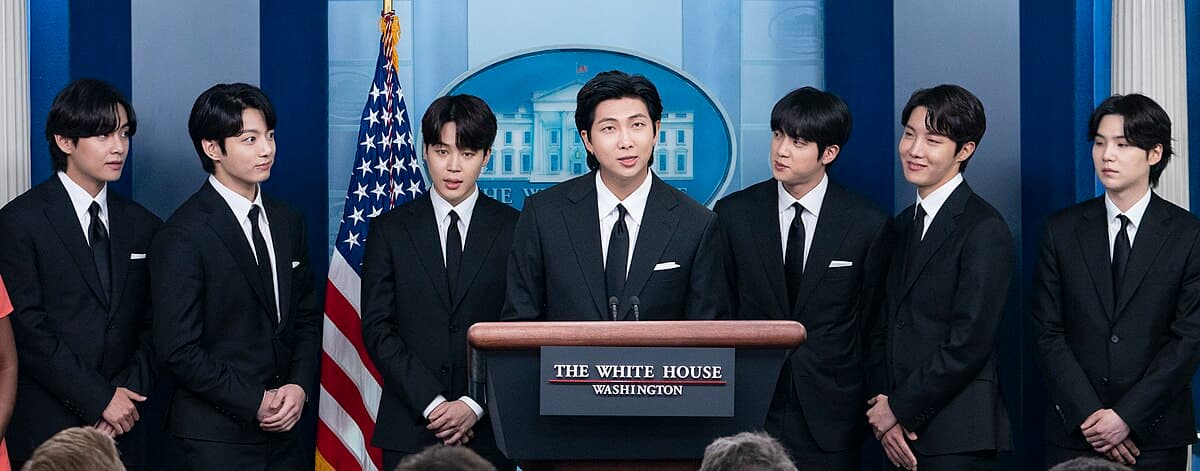
BTS (방탄소년단) debuted under Big Hit Entertainment on June 13, 2013. For the first several years they were a mid-tier group by domestic standards, known within the fandom but not dominant.
The trajectory changed between 2017 and 2020. Their "Love Yourself" series (2017-2018) connected with global audiences at a scale that no Korean act had reached before. "Dynamite," released in August 2020, became the first song by a Korean act to debut at number one on the Billboard Hot 100.
On September 20, 2021, BTS spoke at the 76th UN General Assembly in New York. They addressed climate change, the pandemic, and the experiences of young people globally. The appearance was covered as a diplomatic and cultural event, not only as a music story.
Military service
South Korea's mandatory military service applies to all male citizens, including idols. BTS members completed their service on a staggered schedule:
- Jin: discharged June 2024
- J-Hope: discharged October 2024
- RM and V: discharged June 10, 2025
- Jimin and Jungkook: discharged June 11, 2025
- Suga: completed public service alternative June 21, 2025
All seven members were fully discharged by late June 2025.
The 2026 return
BTS released the album "Arirang" on March 20, 2026. The following day, they performed a free concert at Gwanghwamun Square in central Seoul, livestreamed on Netflix. "Arirang" debuted at number one on the Billboard 200, one of the largest opening weeks for a group in years.
The Arirang World Tour started April 9, 2026, covering dozens of cities through early 2027.
The HYBE, SM, and Kakao corporate drama
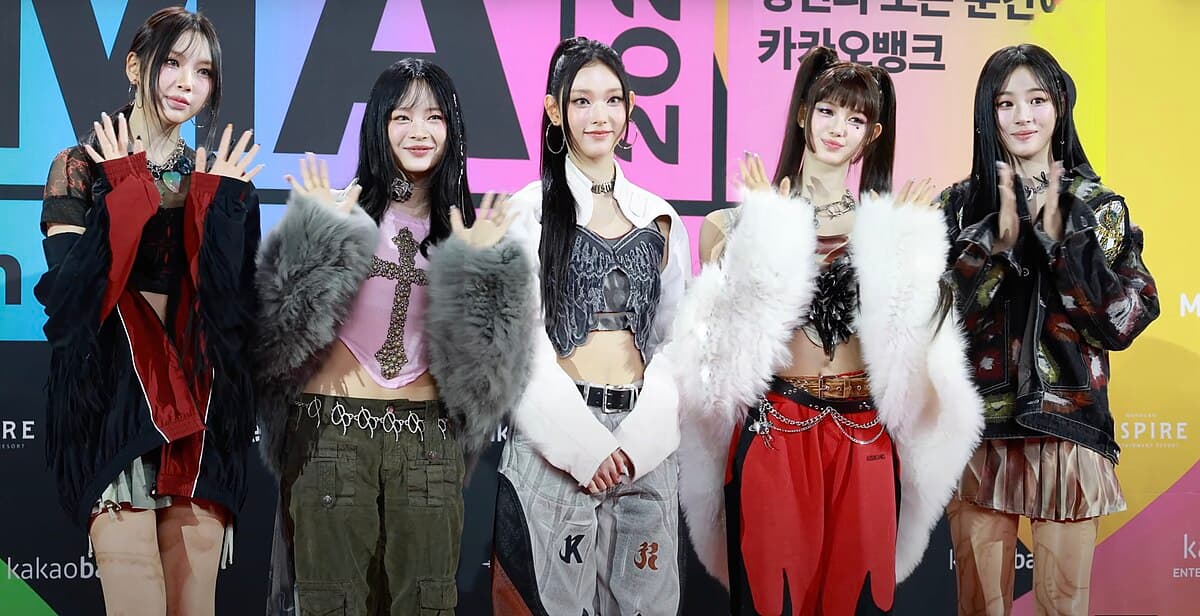
Several interconnected corporate stories from 2023 to 2026 keep appearing in Korean business and entertainment news. Here is the sequence.
The 2023 SM acquisition battle
In early 2023, HYBE announced it would acquire a 14.8 percent stake in SM Entertainment, positioning itself to take controlling influence over its main competitor. Kakao countered with an offer of 150,000 won per share against HYBE's 120,000. Kakao won. HYBE sold its remaining SM stake to Tencent Music in May 2025 for approximately USD 177 million.
Kakao's founder Kim Beom-su (김범수) was charged with stock price manipulation related to the SM acquisition battle. He was acquitted by a Korean court on October 21, 2025. Prosecutors appealed. The acquittal is covered in detail in Seoulstart's Naver vs. Kakao guide, which provides full context on the Kakao corporate structure and the SM acquisition.
NewJeans, ADOR, and Min Hee-jin
NewJeans (뉴진스) debuted in 2022 under ADOR, a subsidiary of HYBE structured to operate with significant autonomy. ADOR's CEO, Min Hee-jin (민희진), was credited across the industry with NewJeans' distinctive visual identity and artistic direction.
HYBE dismissed Min Hee-jin in October 2024, citing alleged management interference. The five NewJeans members declared contract termination with ADOR in November 2024. A Korean court granted ADOR an injunction that barred the members from independent activities. Three members (Haerin, Hyein, and Hanni) returned to work under ADOR between November and December 2025. Danielle's contract was terminated by ADOR on December 29, 2025, and ADOR filed a damages suit of approximately 43 billion won against her, her family, and Min Hee-jin. Minji's status with ADOR remained unresolved as of mid-2026.
In February 2026, Min Hee-jin offered to waive approximately 25.5 billion won (~USD 17.5 million) in stock option payouts if HYBE ended all litigation against her. HYBE rejected the offer. A Seoul court ruled that HYBE must pay Min her stock option payout. HYBE is appealing.
As of April 2026, a four-member NewJeans comeback is expected in the second half of 2026. Multiple lawsuits between HYBE, ADOR, Min Hee-jin, and individual members remain active. The case has no final resolution and both sides have ongoing legal standing.
Where K-pop shows up in daily life
If you live in Korea, K-pop is not something you need to seek out. It will find you.
At work. Korean colleagues follow comebacks the way people in other countries follow sports seasons. Monday conversations reference weekend performances. Company group chats share music video links. Knowing the major groups and agencies means you can follow these references without asking for explanation every time.
In neighborhoods. Subway billboards regularly feature idol groups advertising everything from cosmetics to fried chicken. Department stores cycle idol-themed promotions. Large electronic billboards in Gangnam and Hongdae show music video footage during promotion periods.
Birthday cafes (생일카페 / 생카). When a popular idol has a birthday, fan communities organize pop-up cafes in that idol's honor. Fans rent a cafe, decorate it with the idol's photos, and produce merchandise for visitors. These run for several days and are a normal part of Korean street life, not something unusual. If you see a cafe with unusual decorations and queues, it is likely a birthday cafe.
Music shows. Four weekly music programs, M Countdown (Mnet), Music Bank (KBS), Show Champion (MBC Music), and Inkigayo or 인기가요 (SBS), feature live performances and weekly trophy competitions. These are broadcast nationally and are a primary promotional venue for groups releasing new music.
Year-end shows. The MAMA Awards (마마, run by CJ ENM), the KBS Song Festival, and the SBS Gayo Daejeon are the major year-end ceremonies. They are treated as events by much of the Korean public. The 2025 MAMA was held at Kai Tak Stadium in Hong Kong in November 2025.
Charts and how music is measured
Circle Chart (써클차트) is Korea's official music chart, operated by the Korea Music Content Association and sponsored by the Ministry of Culture, Sports and Tourism. It was renamed from Gaon Chart in July 2022. Circle Chart data is used as the official industry sales reference.
Melon (멜론), owned by Kakao Entertainment, is Korea's most prominent domestic streaming chart. By the end of 2023, YouTube Music had surpassed Melon in monthly active users. Melon's chart remains a key industry reference for domestic consumption.
When Korean music news refers to "charting," it typically means performance on Circle Chart, Melon, or both.
Cultural notes for foreign residents
Comeback versus debut. Debut (데뷔) is when a group first appears publicly. Comeback (컴백) is every subsequent release with a promotional cycle. A group that releases new music every six months has two comebacks that year. It does not mean the group split up and returned.
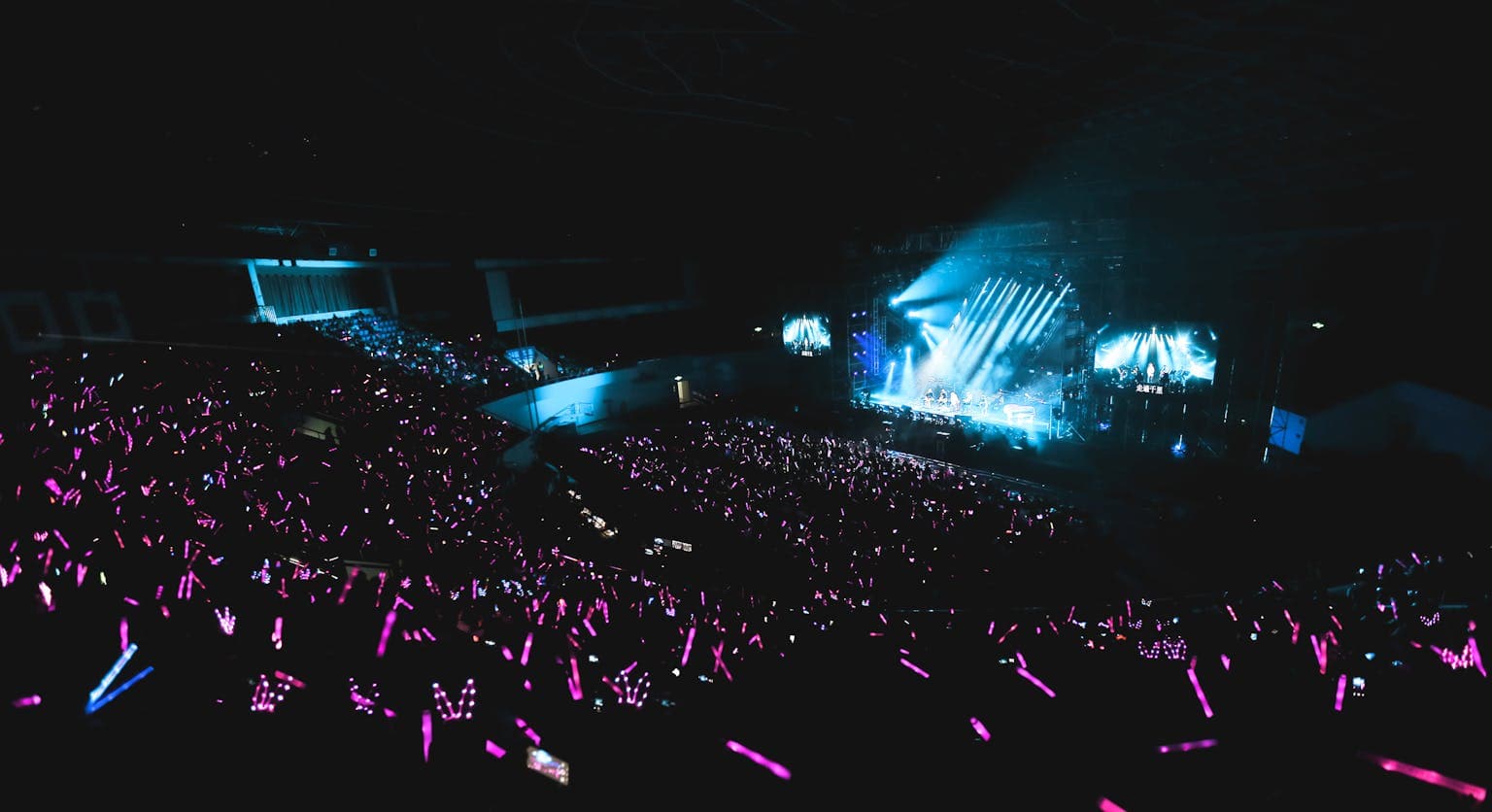
Fandom names and light sticks. Each major group has an official fan community name. BTS fans are ARMY. BLACKPINK fans are BLINK. EXO fans are EXO-L. Fandom membership has formal structure: official membership tiers, ballot access for ticketing, and community-organized support activities. The branded light stick (응원봉) is a physical marker of fandom at concerts.
Sasaeng fans. The term sasaeng fan (사생팬) describes fans whose behavior crosses into surveillance and invasion of personal space. The phenomenon is real, publicly documented, and widely condemned within the fandom community. It is not representative of K-pop fandom as a whole. For foreign residents attending fan events, normal awareness is sufficient.
Trainee system. Before any group debuts, its members spend years as trainees (연습생), training in vocals, dance, and performance under agency contract. Training periods commonly run two to seven years. The system is the source of much criticism about labor conditions and is also the source of the technical consistency that characterizes K-pop performance.
The industry's quiet difficulty
For about a decade, K-pop album sales grew almost every year. In 2024, that growth stalled.
According to Circle Chart, the official Korean music-chart operator, K-pop album sales fell about 19.5 percent in 2024 (as of week 50) compared to the same point in 2023. The physical-album market, which had grown for years on fan-purchase incentives, contracted for the first time in a long run, and the decline carried into 2025.
Several factors are discussed inside the industry: saturation of the physical album market driven by fan-purchase incentives (fan signing event lotteries that require buying multiple copies), oversupply of new groups, and declining novelty effect in streaming markets. Smaller agencies have closed or consolidated. The major agencies have so far maintained revenue through touring and merchandise, but the long sales-growth story has clearly ended.
BTS's Arirang release in March 2026 is being tracked as a test of whether the album market can recover with a major returning act driving demand.
What this guide did not cover
Pre-1990s Korean popular music. There is a rich history of trot (트로트), 1970s and 1980s ballads, and rock that predates the idol era. That history requires its own context and is outside the K-pop generational framework. A deeper guide on Korean music before K-pop is coming.
Specific song rankings and recommendations. Seoulstart does not run music charts or listening guides. This guide covers cultural and industry context, not listening suggestions.
K-drama OST. Drama soundtracks are a distinct commercial category from K-pop proper. They often feature K-pop artists but operate on a different release and chart logic. A guide on K-drama as cultural context is coming.
The full K-pop fandom participation guide. How to attend a music show filming, how birthday cafes work in practice, how concert ticketing works for foreign residents. A practical participation guide is coming.